
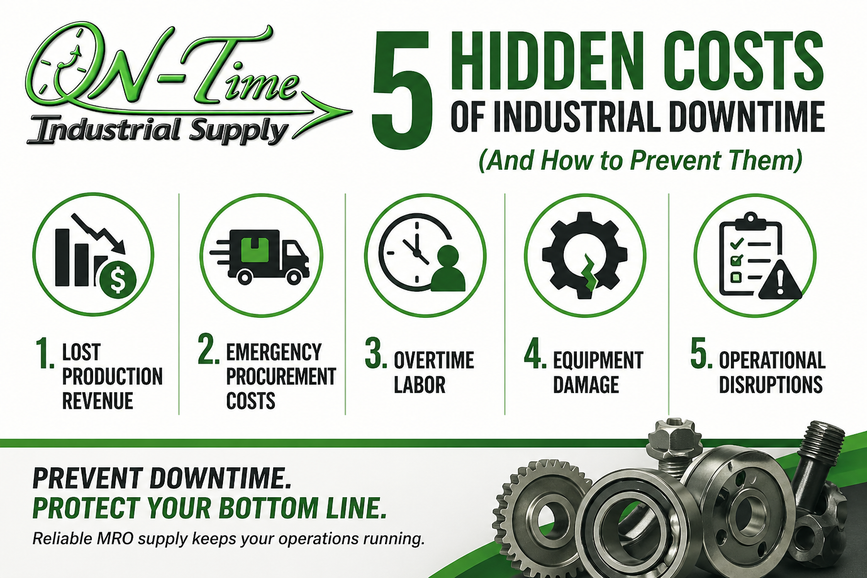
5 Hidden Costs of Industrial Downtime (And How to Prevent Them)
Posted by C Acosta on May 2, 2026
Downtime is one of the most expensive challenges industrial operations face. While most organizations understand the obvious financial impact of halted production, the true cost of downtime often extends far beyond lost output.
Understanding these hidden costs can help businesses improve reliability and strengthen their supply chain.
- Lost Production Revenue
The most visible cost of downtime is the loss of production capacity. Whether operating in manufacturing, energy, marine transportation, or logistics, even short interruptions can result in missed deadlines and lost revenue.
- Emergency Procurement Costs
When equipment fails unexpectedly, maintenance teams often rush to locate replacement parts. Emergency orders frequently require expedited shipping or premium pricing.
Companies that maintain reliable MRO sourcing relationships can significantly reduce these emergency procurement costs.
- Overtime Labor
Downtime often requires maintenance crews to work extended hours to restore operations. Overtime labor costs can quickly escalate when repairs are delayed by missing parts or supply chain challenges.
- Equipment Damage
Running equipment with worn or incorrect components can cause additional damage, leading to more expensive repairs and longer outages.
Having the right parts available at the right time helps prevent these cascading failures.
- Operational Disruptions
Downtime can impact scheduling, logistics, staffing, and customer commitments. The ripple effect across operations often results in costs that exceed the value of the failed component.
Preventing Downtime Through Reliable MRO Supply
A proactive approach to maintenance and supply chain management can significantly reduce downtime risks.
On-Time Industrial Supply works with industrial organizations to ensure maintenance teams have access to the supplies they need when they need them. By providing flexible sourcing and responsive service, we help businesses maintain operational reliability and avoid costly disruptions.